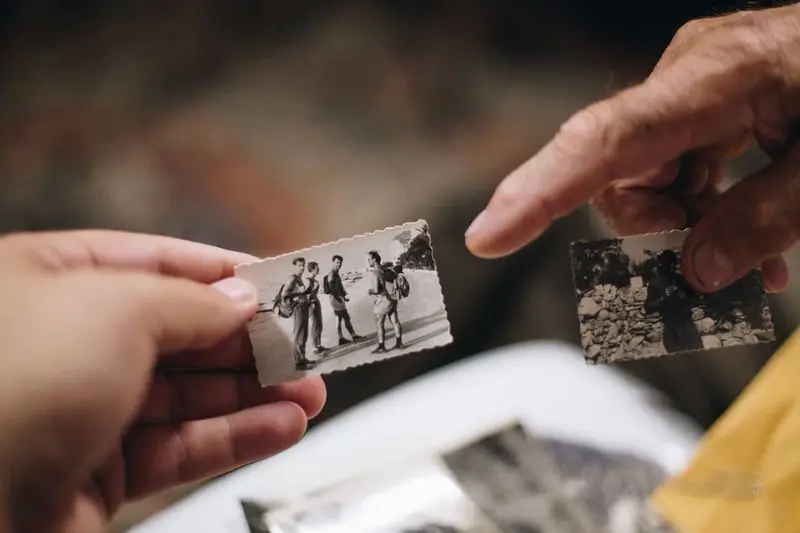
There's a version of looking back that keeps you stuck. Replaying regrets, holding onto old wounds, measuring your present against a past you've already idealized. That kind of rumination doesn't help anyone.
But there's another kind of looking back. One that's quieter, more deliberate, and genuinely useful. It's the kind where you sit with a memory long enough to actually learn something from it, where you trace a decision you made years ago all the way forward to understand why things turned out the way they did.
That kind of reflection is one of the most underrated skills a person can build.
Why the Past Is More Useful Than We Think
Most people treat their history as context at best and baggage at worst. We're conditioned to focus on the future, to set goals, to look ahead. And that's not wrong. But it's incomplete.
Your past is the only dataset you have about yourself. It's full of real evidence about how you handle pressure, what you're actually drawn to when given a choice, and which of your instincts tend to serve you well. No personality test, no journaling prompt about your ideal future, gives you that. Only your lived experience does.
Psychologists who study self-knowledge have found that most people dramatically overestimate how well they know themselves. We think we understand our own motivations, but when we trace our actual behavior over time, the picture is often more complicated and more honest than the story we tell ourselves day to day.
Reflection is how you close that gap.
Patterns You Can Only See in Hindsight
One thing that happens when you spend time deliberately recalling your past is that patterns start to emerge that weren't visible in the moment.
Maybe you notice that every time you took a risk that felt uncomfortable, it led somewhere good. Maybe you notice the opposite. Maybe you see that certain kinds of relationships have consistently left you feeling drained, or that the projects you've been most proud of all had something in common that you'd never consciously identified before.
These patterns are information. When you're facing a new decision, that information is genuinely useful. You're not going on gut feeling or abstract principles. You're drawing on evidence.
This is something experienced mentors and therapists have understood for a long time. The goal of looking at your past isn't to analyze it for its own sake. It's to understand yourself well enough to make better choices going forward.
The Difference Between Ruminating and Reflecting
This is worth getting clear on, because a lot of people assume they're reflecting when they're actually ruminating.
Rumination is repetitive. It circles the same thought without resolution. It tends to be emotional, fixed on what went wrong, and it doesn't produce new understanding. It keeps you in a loop.
Reflection is more like a conversation with yourself. It asks questions. What happened? What was I thinking at the time? What do I know now that I didn't know then? What would I do differently? What am I glad I did?
The tone is different. Reflection is curious. Rumination is punishing.
If you've ever avoided thinking about the past because it felt too heavy or too painful, there's a real chance that what you were avoiding was rumination. They feel similar from the outside but produce very different results.
Writing It Down Changes Everything
There's a meaningful difference between reflecting in your head and writing your memories and thoughts down.
Psychologist James Pennebaker spent decades studying the effects of expressive writing, the kind where you write about significant experiences in your own life. His research found that people who wrote about emotionally significant events showed improvements in mental and physical health, and also reported clearer thinking and a better sense of direction. The act of putting experience into words forces you to organize it. You have to decide what happened, what mattered, and in what order. That organizing process does something to how you understand the experience.
When you write a memory down, you're also creating something you can return to. You can read something you wrote two years ago and see yourself more clearly than your current self can from the inside. That outside-in perspective is genuinely valuable. You notice things. You see how your thinking has shifted, or where it hasn't shifted when maybe it should have.
How Reflecting on the Past Builds Better Judgment
Judgment, the kind that actually holds up under pressure, isn't built in classrooms or from reading about other people's lives. It's built from paying close attention to your own.
Every decision you've made was made under real conditions, with real information, by the real you. When you reflect on those decisions with honesty, you're essentially training your own pattern recognition. You learn what your blind spots tend to be. You get better at recognizing when a situation resembles something you've navigated before. You start to trust yourself more, not because you're always right, but because you understand how you think.
This is what people mean when they talk about wisdom. It's not that wise people have more information. It's that they've spent more time learning from what they've already lived.
Your Memories Are Richer Than You Remember
One thing most people discover when they start writing about their past is that they remember more than they thought.
You don't start with a blank page and a vague sense of your childhood. You start with a prompt, a single question, and the answer pulls something up. And then something connected to that comes up. And then something else. The memories are there. Most of us just never create the conditions for them to surface.
This matters beyond personal decision-making. The things you remember about your own life, the small moments, the turning points, the relationships that shaped you, are irreplaceable. They're not just useful to you. They're part of something that belongs to the people who love you.
The stories we carry from our past aren't just memories. They're instructions. For who we are, how we got here, and what we actually believe when it matters.
A Simple Way to Start
You don't need a therapist or a journal or a dedicated hour in the morning to start reflecting meaningfully on your past. You just need a question worth answering.
What's the earliest memory you can recall? What's a decision you made that you're still glad you made? Who shaped you more than they probably know?
Start there. Write down whatever comes up, without editing yourself, without trying to make it tidy or complete. The point isn't to produce a polished account. The point is to look.
Over time, if you do this consistently, you'll notice something shift. You start carrying your own history differently. Less as weight, more as reference. Less as something to move on from, more as something to learn from.
That's not nostalgia. That's how self-knowledge actually gets built.
Sign up and start your first story today.