Your Memory Is Not a Recording, It Is a Rough Draft You Keep Editing
Most people think of memory like a video file. You lived it once, it got saved, and now you can press play whenever you want. That is not how it works. Every time you recall something, your brain pulls the memory out, handles it, and puts it back down again. The catch is that it rarely goes back down exactly the way it came up.
Researchers call this reconsolidation. Each time a memory is retrieved, it becomes temporarily flexible, almost like wet clay. New information, your current mood, or even a conversation you just had can blend into that memory before it hardens again. You are not pulling up the original event. You are pulling up your most recent version of it, then adding a new layer before storing it again.
This is why two siblings can argue about how a family vacation actually went, both completely convinced they are right. Neither one is lying. Both of them are remembering their own edited version of the same day.
Writing Forces Your Brain to Stop Editing and Start Committing
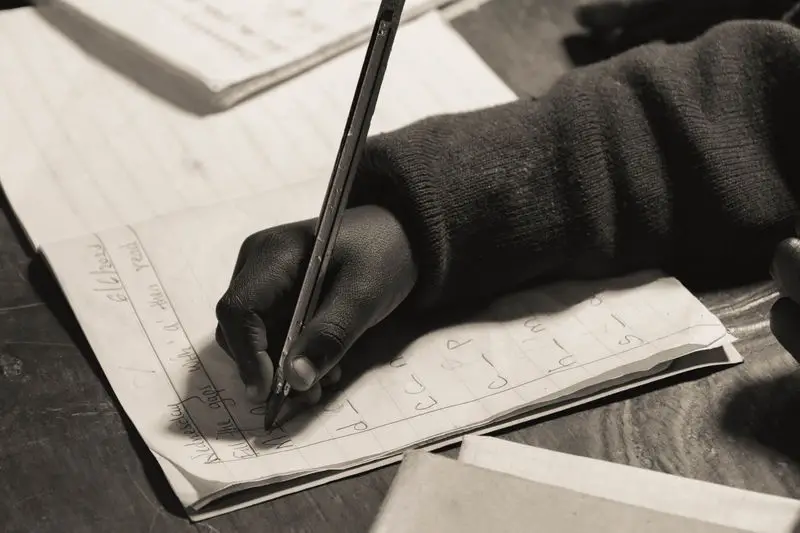
Here is where writing changes the equation. When you sit down to write a memory instead of just thinking about it, your brain has to do something different. It has to choose specific words, put events in order, and decide what mattered enough to include. That process is called elaborative encoding, and it forces a level of detail and structure that casual remembering skips right past.
Psychologists who study this call it the generation effect. People remember information far better when they have to produce it themselves, rather than simply recognize it or recall it loosely. Writing is generation in its purest form. You are not skimming a memory. You are rebuilding it, sentence by sentence, and that rebuilding process locks it into long term memory with far more strength than casual recall ever could.
There is also a simpler, more practical reason writing protects memory. Once you write something down, it exists outside your brain. The next time you think about your father's stories from school, or your grandmother's recipe for Sunday dinner, you are not relying on a memory that has been reshaped by twenty years of re-remembering. You are reading words that were captured close to the moment they were still sharp.
Why This Matters More As You Get Older
Memory decay is not just about forgetting that something happened. It is about losing the texture around it. The exact words someone used. The smell of the kitchen. The specific year something happened, instead of a vague decade. These details fade first, long before the broad strokes of a story disappear.
Studies on autobiographical memory show that emotionally significant memories hold up better over time than neutral ones, but they are still vulnerable to drift, especially the longer they go unwritten. A study published in the journal Memory found that people who kept a written record of personal events recalled those events with far more accuracy years later compared to people who relied on memory alone. The gap was not small. The people who wrote things down consistently outperformed people who simply tried to remember harder.
This has a real consequence for families. The stories grandparents tell at holidays, the ones that get a little different every year, are not getting more colorful through error. They are getting reshaped through repeated recall, the same way every memory does. Without a written version somewhere, the most accurate account of an event might be the one that existed only in someone's head the first time they remembered it, decades before anyone thought to write it down.
Writing Down a Memory Is an Act of Protection, Not Just Reflection
People often treat journaling or writing down family stories as a soft, sentimental habit. Something nice to do if you have spare time. The research suggests something more urgent than that. Writing is one of the only tools available that can stop the slow erosion that happens to every memory you keep only in your mind.
This is also why the act of writing matters more than the act of remembering out loud. Telling a story to your kids at dinner is wonderful, and you should keep doing it. But spoken stories live in other people's memories too, which means they are subject to the same drift, the same reconsolidation, the same slow editing. A written account stays still. It does not get smoothed over by retelling. It does not lose the year, the name, the small detail that made it real.
What This Means for the Stories You Have Not Written Yet
If you have a memory of your father's childhood, or your grandmother's first job, or the year you fell in love, the version sitting in your head right now is probably the freshest, most accurate version you will ever have access to. It will not get clearer with time. It will only get further from the original event, reshaped a little more with every retelling.
That is the actual stakes of putting something into words. Not whether your story is interesting enough to write down, but whether the version you are carrying right now will still exist in ten years, or whether it will have quietly become something else by then.
A Few Minutes of Writing Can Outlast Decades of Remembering
The science is fairly direct on this point. Memories that get written down hold their shape. Memories that only get replayed in your head keep shifting, sometimes in small ways, sometimes enough to change the whole story. You do not need to be a writer to benefit from this. You just need to put the memory into words before your brain quietly edits it again.
This is the entire idea behind Memoracy. One question a day, answered in your own words, becomes a fixed point that does not drift the way memory does on its own. Years from now, your family will not be relying on a story that has been reshaped by decades of retelling. They will have the version you actually wrote, close to when you still remembered it clearly.
Sign up and start your first story today.