Most people have a vague idea of what a diary is. You write down what happened today. Maybe you vent a little. You close the notebook and repeat tomorrow. That format has worked for centuries, and for good reason. It gives you a record of your days, a place to process your thoughts, and a habit that keeps you honest with yourself.
A memory journal is something different, and the difference matters more than it might seem at first.
What Makes a Memory Journal Its Own Thing
A diary lives in the present tense. You write about today because today just happened. A memory journal reaches further. It asks you to look back across your life, to pull forward the moments that stuck with you, and to put words around things you may have never spoken aloud.
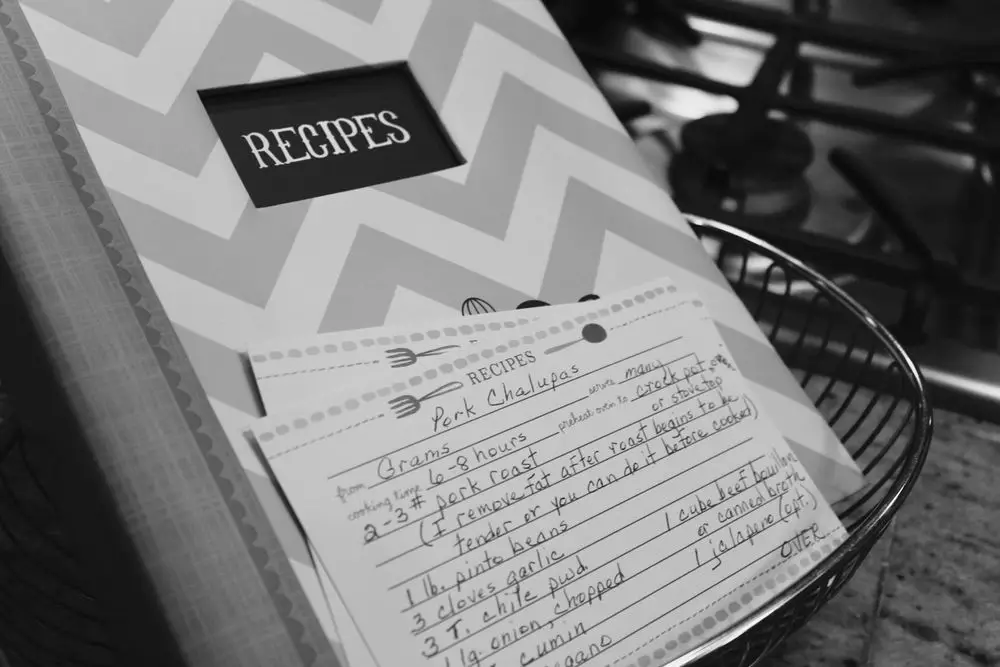
The questions that drive a memory journal tend to sound like this: What is the earliest memory you can recall? What is a family recipe that has been passed down to you? Who was the first person outside your family who believed in you? What is a challenge you went through that you are glad happened?
These are not diary prompts. They do not ask what you did today. They ask who you are and where you came from.
That shift changes everything about the writing. A diary entry from a Tuesday in 1987 might tell you someone was running late and it rained. A memory journal entry from that same era might tell you what your grandmother smelled like, what she always said when she was proud of you, and how you felt the last time you sat in her kitchen. One is a record. The other is a story.
The Audience Is Different Too
When most people write in a diary, they write for themselves. Sometimes they write as a way to think, to vent, or to process something they cannot say out loud. The audience, if there is one, is usually just a future version of the same person.
A memory journal carries the possibility of a different audience entirely. Your kids. Your grandkids. Family members who were not born yet when the things you write about actually happened.
This is what changes the stakes. When you write about what it felt like to immigrate to a new country, or what your parents were like when you were young, or the moment you knew you were going to marry the person you married, you are not just journaling for yourself. You are handing something down.
Most families do not realize what they are losing until it is already gone. The stories people assume will get told someday tend to disappear when the person who lived them does. A memory journal is a way of making sure that does not happen, one entry at a time.
Structure Helps More Than You Would Expect
One reason many people struggle with diary-keeping is that it requires you to generate the topic yourself, every single day. Blank pages are harder than they look. After a long day, staring at an empty journal and trying to figure out what is worth writing about is often enough to make someone close it without writing anything.
A memory journal with guided prompts solves that problem at the root. You do not have to decide what to write about. Someone has already thought about what kinds of questions lead to meaningful answers, and the prompts do the work of bringing those questions to you.
That structure also creates something useful over time. When your entries are organized around life categories, like childhood memories, family connections, cultural heritage, life milestones, and the rest, you end up with a biography that covers the full shape of a life rather than just random moments that happened to feel blogworthy on a given afternoon.
Consistency Builds Something That Random Writing Cannot
A diary kept for a week and abandoned leaves behind a week. A diary kept for twenty years leaves behind a record of twenty years, but it can still read as a long string of individual days.
A memory journal answered over months and years builds something more like a book. Each entry is a chapter in a story that is still being written. The more categories you touch, the more complete the picture becomes. And the more complete the picture, the more useful it is to the people who will eventually want to understand who you were and what your life was like.
This is the thing that tends to surprise people when they start writing one. They begin thinking they are doing something small, answering a quick question about a childhood memory or a family tradition. But they look back after six months and realize they have written things their kids have never heard, things their spouse did not know, things they themselves had not thought about in years.
How Memoracy Approaches This
Memoracy was built around this idea. The platform gives you one prompt per day drawn from eight life categories, which means you are never staring at a blank page wondering what to write. You earn one story credit per day, answer the prompt, and the entry takes its place on your personal timeline.
Over time, that timeline becomes a growing record of your life as you actually lived it. You can keep entries private, share them with family members you invite, or make them public for the broader Memoracy community. When multiple family members join, their timelines connect into a shared family history.
The goal is not to create a polished memoir. It is to capture the real stories, in your own words, before they disappear. The questions are designed to get at the things your family will eventually wish they had asked. And the daily rhythm keeps you coming back in a way that a blank journal often cannot.
Which One Is Right for You
Both formats have real value. A traditional diary is a good tool for processing your present, working through emotions, and keeping a record of your daily life. If that is what you are looking for, it is hard to go wrong with a simple notebook and a consistent habit.
A memory journal is for something else. It is for people who want to leave something behind, who are aware that the stories in their heads are not guaranteed to survive them, and who want the people they love to have access to those stories someday.
The two are not mutually exclusive. Plenty of people keep both. But if you have ever wished you could go back and ask your parents or grandparents certain questions, you already understand what a memory journal is for and why it matters.
The good news is that it is never too late to start answering the questions yourself.
Start your Story on Memoracy.